
LOUISVILLE, Ky. (WDRB) — The Kentucky Derby has been running since 1875.
That makes it the oldest continuously held sporting event in America.
It should feel old. It doesn't.
Instead, it just delivered one of the biggest television audiences in the country — 19.6 million viewers across NBC and Peacock, peaking at 24.4 million during the race itself.
That's more than the NCAA men's basketball championship game. More than the World Series average. More than the NBA Finals.
Only the giants of American television — the Super Bowl, the Olympics, the College Football Playoff championship and the occasional one-off event — clearly stand above it.
For a sport that has spent years trying to modernize, that number says something important:

It's a little like Disney World, here at the entrance to Churchill Downs.
The Kentucky Derby already has.
Walk into Churchill Downs on Derby Day, and the moment hits almost on cue.
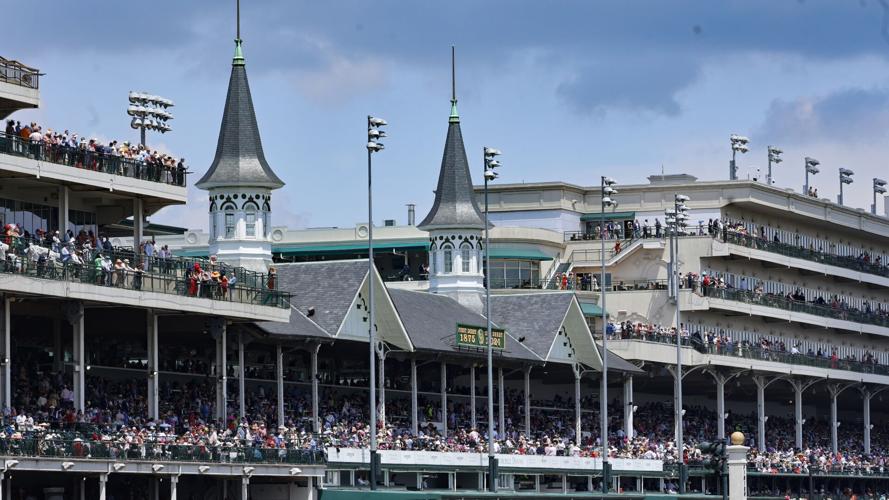
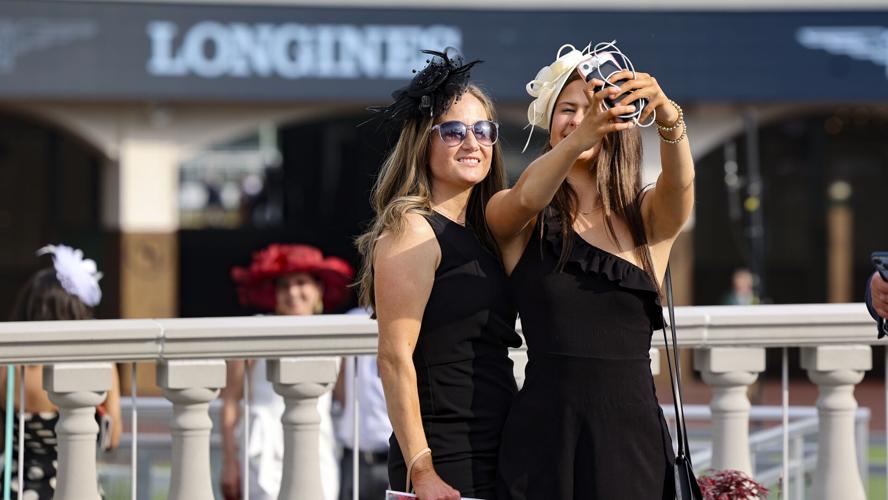
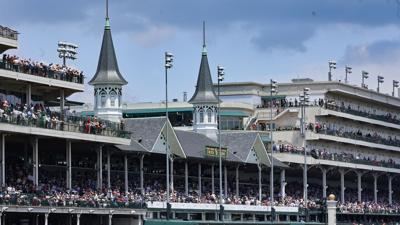
You pass the statue of Aristides. You see the Twin Spires. And people stop. They pull out their phones. They gather in groups. They adjust hats and dresses and jackets and angles.
They take the picture.
It's as much a ritual now as the race itself, a pause to document that you were here, that you stood in this place, that you were part of this day. Churchill has become a Great American Selfie Spot.
It didn't stumble into that. It has, over time, reshaped itself into something more than a racetrack: a place designed to be experienced, shared and remembered.
A place that understands something essential about modern sports: People don't just want to watch anymore. They want to be part of it.
Those 150,000 people on the grounds aren't just spectators. They are storytellers. They are marketers. They are, whether they realize it or not, part of the Derby's distribution system.
Every hat, every outfit, every shot framed beneath the spires turns into content. Into reach. Into momentum.
The Derby isn't just televised. It's amplified.
That amplification shows up on screens.

Fans take photos near the Churchill Downs paddock.
The NBC broadcast leans into it. The color, the fashion, the aerials, the energy. It presents the Derby not as a niche sport but as a national moment.
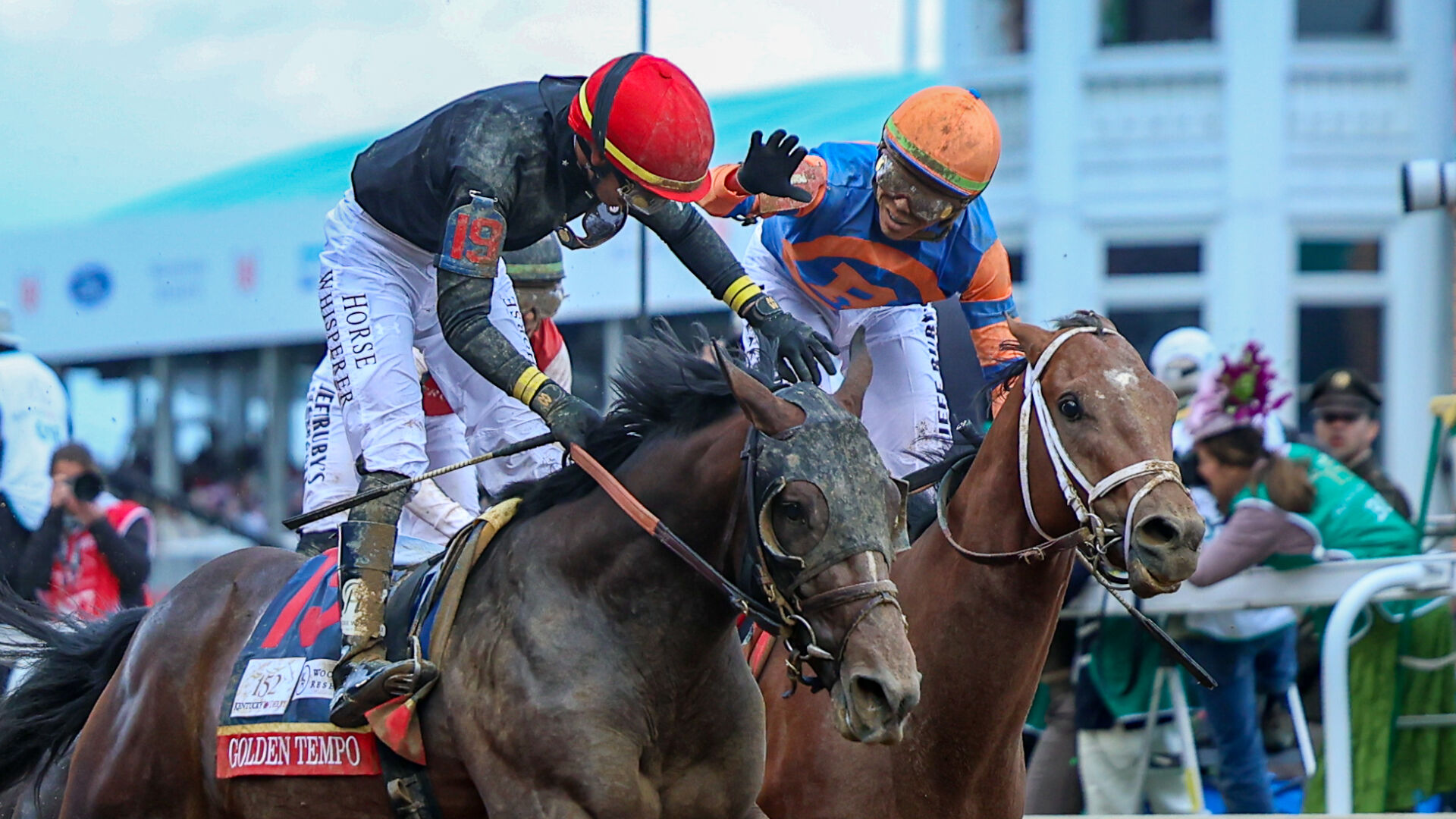
And for two minutes, it still delivers the thing that made it matter in the first place: chaos, strategy, speed and a finish that can't be scripted.
That combination — spectacle and sport — is hard to replicate. The Derby has spent decades refining and redefining it.
Which is why what NBC did in the moments after the race is worth a second look.
As the winner's circle filled and the roses were draped, the network cut away to the start of an NBA playoff game. The schedule demanded it. But the Derby audience — more than 24 million at its peak — wasn't tuned in for a race alone. It was there for the payoff. The emotion. The tradition. The things that have made this day matter for 150 years.
Cutting away from that wasn't just a programming decision. It was a misread of what the Derby has become.
And given the size of the audience NBC left behind, it was probably also a miscalculation.
There's another sign of that evolution.

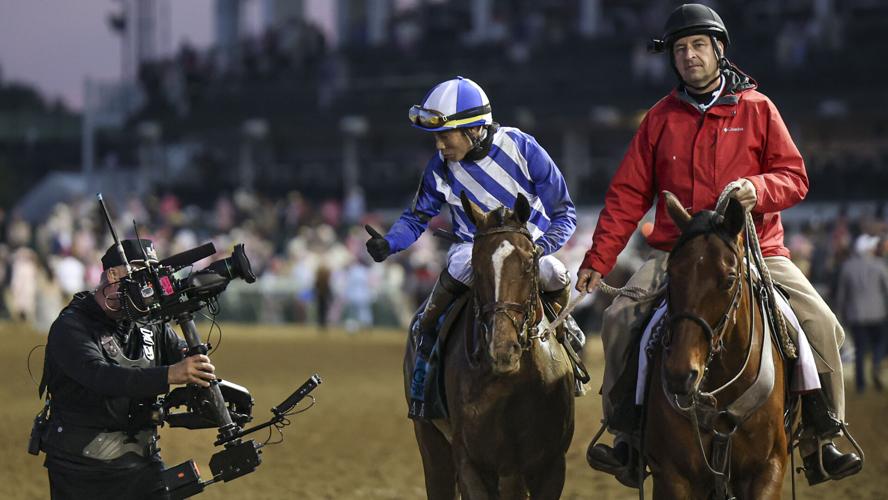
Jockey Jose Ortiz gives a thumbs up to the NBC camera after winning the first ever prime-time Kentucky Oaks aboard Always a Runner.
This year, Churchill Downs and NBC moved the Kentucky Oaks — Friday's race for 3-year-old fillies — into prime time. The result: 2.4 million viewers for an event that, outside of racing circles, has long flown under the radar despite drawing one of the largest-attended days in American sports.
That number matters because of what it suggests: that the Oaks has always had the crowd but it never had the stage. Change the placement, and the audience follows.
Which raises the question Churchill Downs is almost certainly already asking: If a time-slot change can unlock that kind of growth for Friday, what would prime time do for the Derby itself?
It's not an idle question. It's the next logical step in a 150-year evolution that shows no sign of stopping.
The Kentucky Derby doesn't feel like a relic.
It feels like something that has figured out how to stay relevant without letting go of what made it matter.
History, dressed for the present. A sporting event that became an experience. An experience that became a shared moment, traveling far beyond the track.
Those numbers aren't a sign the Derby is merely surviving.
They're a sign it's still growing.
And after 150 years, it still hasn't found its ceiling.
Copyright 2026 WDRB Media. All Rights Reserved.