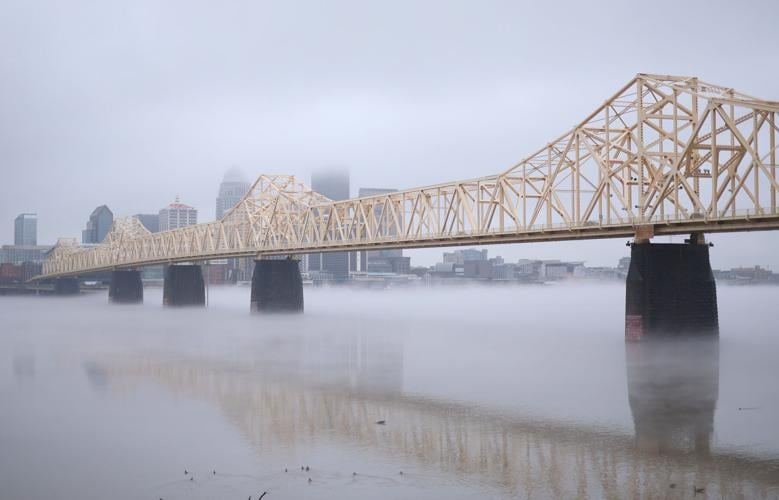



LOUISVILLE, Ky. (WDRB) — Kentucky transportation officials plan to reduce the Clark Memorial Bridge from four lanes to three later this year, a change that will surely lead to backups on the 96-year-old bridge and funnel traffic onto existing toll bridges over the Ohio River.
Plans call for two northbound lanes into southern Indiana and just one lane into Louisville, though the project is still in the planning and design phase right now, according to the Kentucky Transportation Cabinet.
KYTC spokesperson Morgan Woodrum said the change is being made with safety in mind and a goal of restoring the bridge to its "normal weight carrying capacity."
"We do recognize the fact that that could affect traffic flow," Woodrum said. "We're continuing to study those traffic patterns and we're coordinating very closely with Jeffersonville city leaders, as well as INDOT, to evaluate any of those potential impacts."
Mayor Craig Greenberg refused a one-on-one on-camera interview for this story Tuesday, and his office hasn't responded to a request for comment. A spokesperson shared a statement from the city's transportation department, only saying they're in "regular contact with KYTC."
The width of each lane will increase, KYTC said, from 9.5 feet to 11 feet, allowing more room for cars despite the decrease in lanes. Work on the project — which is projected to cost $8 million — could begin sometime in 2026, though KYTC said it doesn't have a definitive timeline right now. State workers will use the project to also address some of the steel on the bridge, repairing deterioration KYTC inspections have found in recent years.
The most recent traffic count on the 2nd Street Bridge showed an average of 34,879 cars traveled it per day in 2024, up from 23,881 in 2020 (calculated before the onset of the COVID-19 pandemic).
Early this year, a Kentuckiana Regional Planning & Development Agency committee amended the scope of work on the 2nd Street Bridge from "maintenance" to "repairs and configuration." The public comment period for that amendment ran from Dec. 29 to Jan. 12. The only public comment submitted recommended adding a protected, multi-use path or bike lane and suggested just one lane for cars each direction. However, the commenter noted concern with the proposed change.
"Making it 1 lane southbound will hurt Indiana residents who rely on this bridge for a commute, and it will force more traffic onto the I-65 bridge," the comment read. "Oppose."
In late January, KIPDA's Transportation Policy Committee approved the lane reduction. No member opposed, and there was no discussion.
Woodrum said public input "isn't really required" at this stage of the project but noted state officials have heard feedback from drivers and local leaders over the years.
"We understand that there will be frustrations due to possible traffic increase, but, ultimately, we are making sure that you are able to make it to school, work, the doctor, wherever you need to go," Woodrum said. "That is our top priority."
The Indiana Department of Transportation said KYTC owns and maintains the bridge, though a spokesperson said they'll continue to "communicate and coordinate throughout the project."
Before tolls were in place, the Kennedy Bridge carrying Interstate 65 traffic over the Ohio River saw more than 120,000 cars a day. But years after the Ohio River Bridges Project was completed, that number dropped to around 80,000. Many of those vehicles have rerouted to the 2nd Street Bridge, and since that increase in daily traffic on the bridge, data obtained from Kentucky State Police shows a noticeable increase in crashes.
'Deterioration'
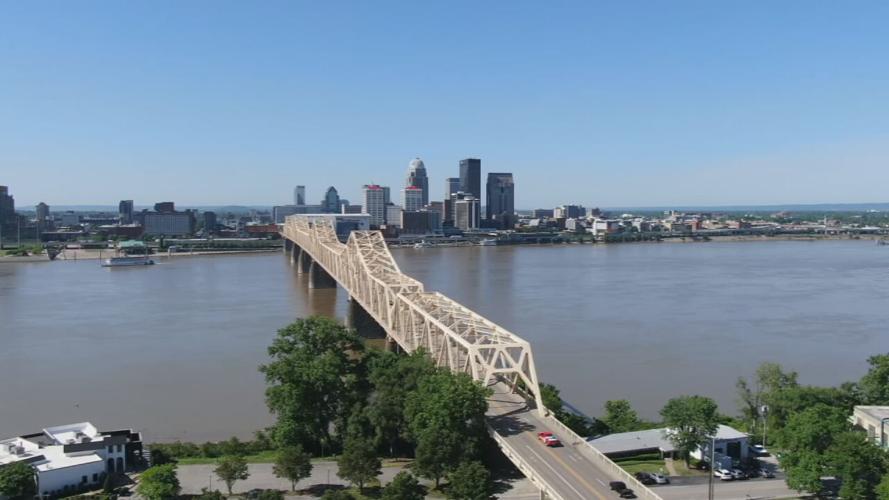
The historic steel bridge, which stretches 5,746 feet long and spans just 38 feet wide, has regularly carried four lanes of traffic — two in each direction. Recent high-profile crashes have only fueled urgency for changes on the bridge, including one incident involving Sydney Thomas' truck dangling over the edge, a chilling memory still fresh in the minds of many.
In fact, crashes on the 2nd Street Bridge hit a six-year high in 2023, with more involving tractor-trailers and other heavy trucks than at any point in at least a decade.
As recently as July 2025, some experts have floated the idea of reducing the bridge from four lanes to three in an effort to improve safety and manage traffic flow.
"Now we all get to figure out if the results of their studies make sense to all of us as well," Indiana State Rep. Wendy Dant Chesser, D-71, said then.
A consultant's count done for Kentucky and Indiana state governments after tolling began on the RiverLink bridges concluded an estimated 44,800 vehicles were crossing the 2nd Street Bridge in 2018, up from 25,600 in 2013. Tolls began on the nearby I-65 bridges and the upriver Lewis and Clark Bridge in late 2016. The 2018 traffic count by Frankfort-based HMB Professional Engineers found truck traffic increased on the bridge once tolling began, accounting for 2% of the crossings in 2013 and 4% of the crossings in 2018.
The state-led 2020 count showed trucks made up 11% of the daily traffic on the bridge.
The bridge is considered "functionally obsolete" because its Depression-era design is outdated, meaning the bridge would be built differently if started anew today. It has no emergency lanes or shoulders.
It was rated in satisfactory condition during its last inspection in June 2022.
In December 2024, KYTC announced newly reduced weight limits for heavier vehicles like tractor trailers after a recent routine inspection found deterioration in the bridge's steel beams and connections. KYTC said its inspection and analysis found the bridge's "deterioration has progressed to the point where weight-limit restrictions are needed to better protect the structure from damage and ensure continued traffic safety."
Below are the new limits, starting with Type 1, which includes passenger cars, pickup trucks, SUVs and vans:
- Type I: 20 tons (no change)
- Type II: 25 tons (previously 27 tons)
- Type III: 29 tons (previously 34 tons)
- Type IV: 36 tons (previously 40 tons)
- 5 Axles: 31 tons (previously 40 tons)
- 6 Axles: 32 tons (previously 40 tons)
- 7+ Axles: 34 tons (previously 41 tons)
KYTC said vehicles exceeding the stated limits were advised to use the Sherman Minton Bridge on Interstate 64 or the Lincoln and Kennedy bridges on I-65 instead.

This undated photo shows an aerial view of the Clark Memorial Bridge — also known as the 2nd Street Bridge — that connects downtown Louisville to southern Indiana. (WDRB photo)
Copyright 2026 WDRB Media. All Rights Reserved.