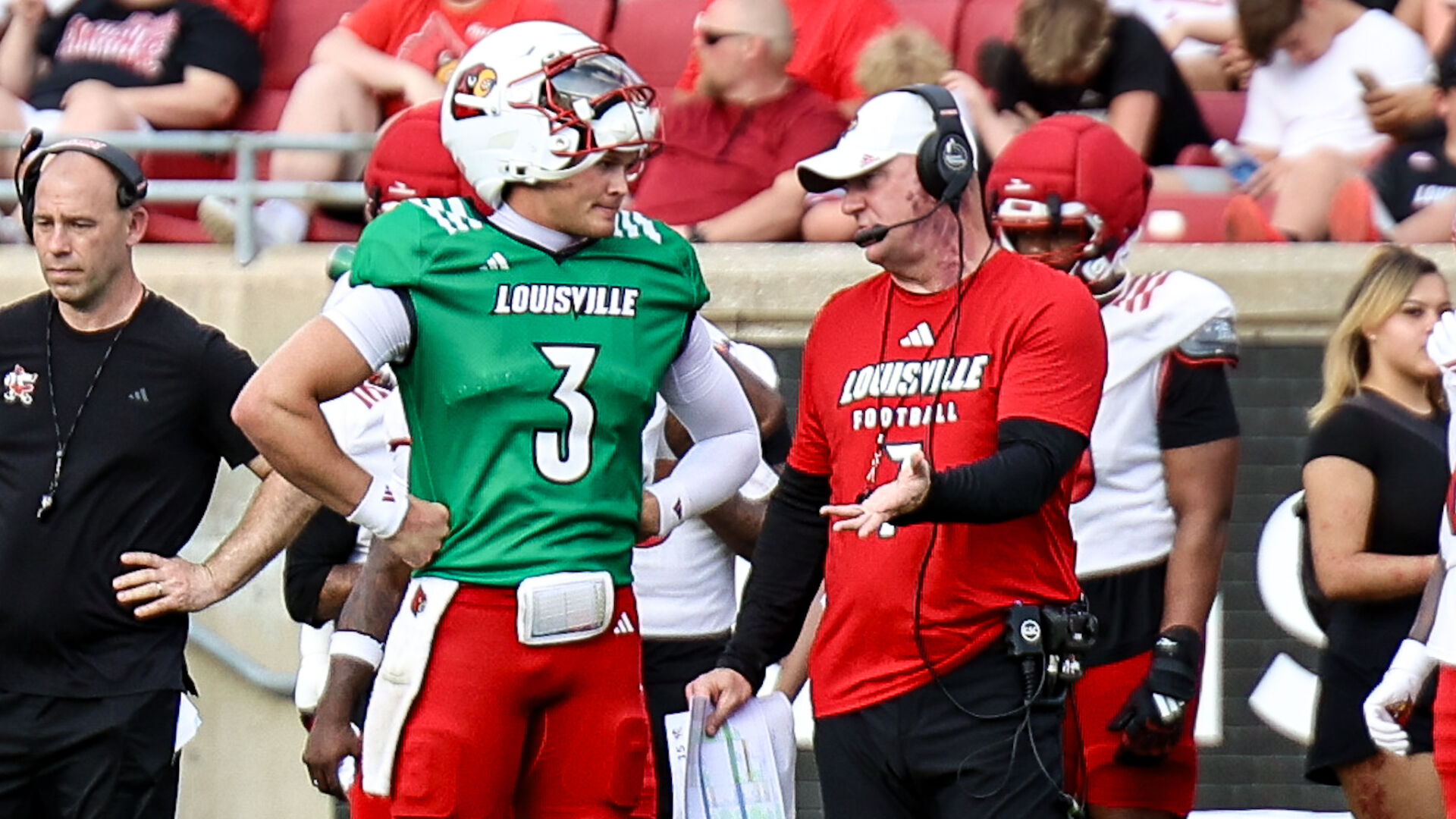



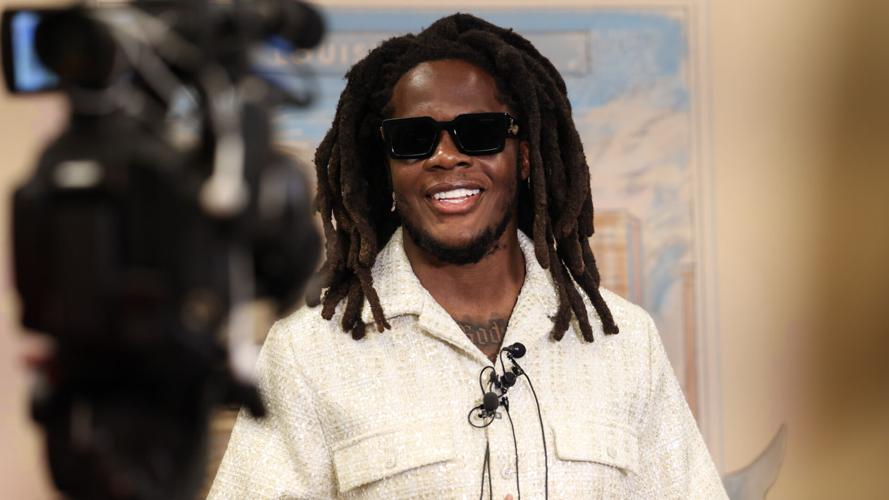
LOUISVILLE, Ky. (WDRB) — Teddy Bridgewater came back to Louisville on Thursday dressed as the featured speaker for the annual They're Off! Luncheon, but talking like a man who once worked the Derby admission gate.
Before the NFL checks, before the knee injury, before the concussion cart ride and the comeback tours, Bridgewater was doing something that looked ordinary enough for a college kid at Churchill Downs, checking bags at the Kentucky Derby and telling people, no, that baby bottle isn't fooling anybody.
"I worked at the Kentucky Derby one year," Bridgewater remembered, smiling. "... Checking coolers."
It seems almost quaint, thinking back to those pre-NIL days. But it's also a little misleading.
Louisville | Kentucky | Indiana | Eric Crawford
Because the truth is, Teddy Bridgewater was never quite like the other college kids around him.
While some freshmen were trying to sneak drinks into Churchill Downs, Bridgewater was the one stopping them. He didn't drink. Didn't live in the clubs. He didn't drift into leadership. He arrived with it.
"I always felt like I had to grow up a little faster," Bridgewater said. "Because I felt like I was responsible for our group of guys that came up from Miami."
Louisville didn't so much teach Teddy Bridgewater how to grow up as give him a place to finish doing it.
And maybe that's why, all these years later, after a football life that has bent and broken and rebuilt him in more ways than most, he came back here to talk about wishing he had stayed one more year just to be a college kid.
"I wasn't really ready to grow up," he said. "Deep down inside, I just wanted to stay in college another year ... play the game half the day, go to practice the other half, not pay any bills."
The funny thing is, he never really lived that life in the first place. He was already something else.
Bridgewater's story has never followed a straight line. It's bounced from promise to pain to perseverance to reinvention, like a movie he joked one day might actually get made.
There was the first-round pick. The early success. Then the injury that nearly took everything, a knee so severe there were whispers he might never play again, even worse possibilities spoken aloud.
There were the stops: New York, New Orleans, Carolina, Denver, Miami, Tampa, Detroit. There were wins and stretches of brilliance, and stretches where the game seemed to move on without him.
There was a concussion he said scared him more than anything else, a moment he still can't fully remember. The image of himself on that cart is still one he can't quite shake.
"I still get teary-eyed every time I see that image," he said.
There was the point where football stopped feeling like something he loved and started feeling like something he owed. And so, eventually, he walked away from it. Not with a press conference. Not with a farewell tour. He went home.
At Miami Northwestern, his alma mater, Bridgewater became a coach. Not the symbolic kind. The real kind. He drove kids. Fed kids. Made sure they had what they needed. He won a state championship doing it.
"I found that joy, that passion of just coaching kids, molding them, shaping them, giving them all the life lessons that I was taught, all the morals that all the great men instilled in me and pouring back into them," Bridgewater said. "And it was one of the best years of my life, because I felt like I was finally doing something that I wanted to do. I felt that the last three years of me playing football was for everyone else. And when I finally stopped and started coaching, I was like, oh, man, this is like, what I really want to do."
And then he got in trouble for it.
Bridgewater was suspended for providing what the rules called "impermissible benefits" — meals, transportation, the kind of everyday help that doesn't show up in a box score but shows up everywhere else. For a moment, doing the right thing made him a problem. And then it made him a law.
The Florida legislature passed what became known as the Teddy Bridgewater Act, allowing coaches to spend their own money — up to $15,000 — to help student-athletes with basic needs. The rules changed. Teddy didn't.
And somewhere in all of that, football came calling again. A stop in Tampa Bay. A quarterback room that reminded him what the game used to feel like.
"I found this new love for football," he said. "I feel like I'm 21 again."
So now he's back in the NFL again, in Detroit, a veteran in a room full of younger quarterbacks, a backup who plays when needed and teaches whether he's on the field or not. Not chasing anything. Not proving anything. Just playing.
Which brings him back to Louisville, where none of that had happened yet. Where the game was still simple. Where the relationships were still forming. Where a kid from Miami became something more, even if he was already a little ahead of everyone else when he arrived.
"It's a place that helped a young Teddy Bridgewater… grow into a man," he said.
You can hear it when he talks about it. The gratitude. The emotion. The curiosity about what might have been if he'd stayed just a little longer.
The strange thing about growing up fast is that you don't always realize what you left behind until you've been gone a while.
Teddy Bridgewater had been ready for the next step. That didn't mean he wasn't allowed to miss the step he skipped.
After everything football has taken him through — the pain, the fear, the detours, the unexpected second chances — the thing he seems to value most now isn't the career. It's the feeling he found again. The one that, for a few years in Louisville, came as close to being simple as it ever would.
Copyright 2026 WDRB Media. All Rights Reserved.