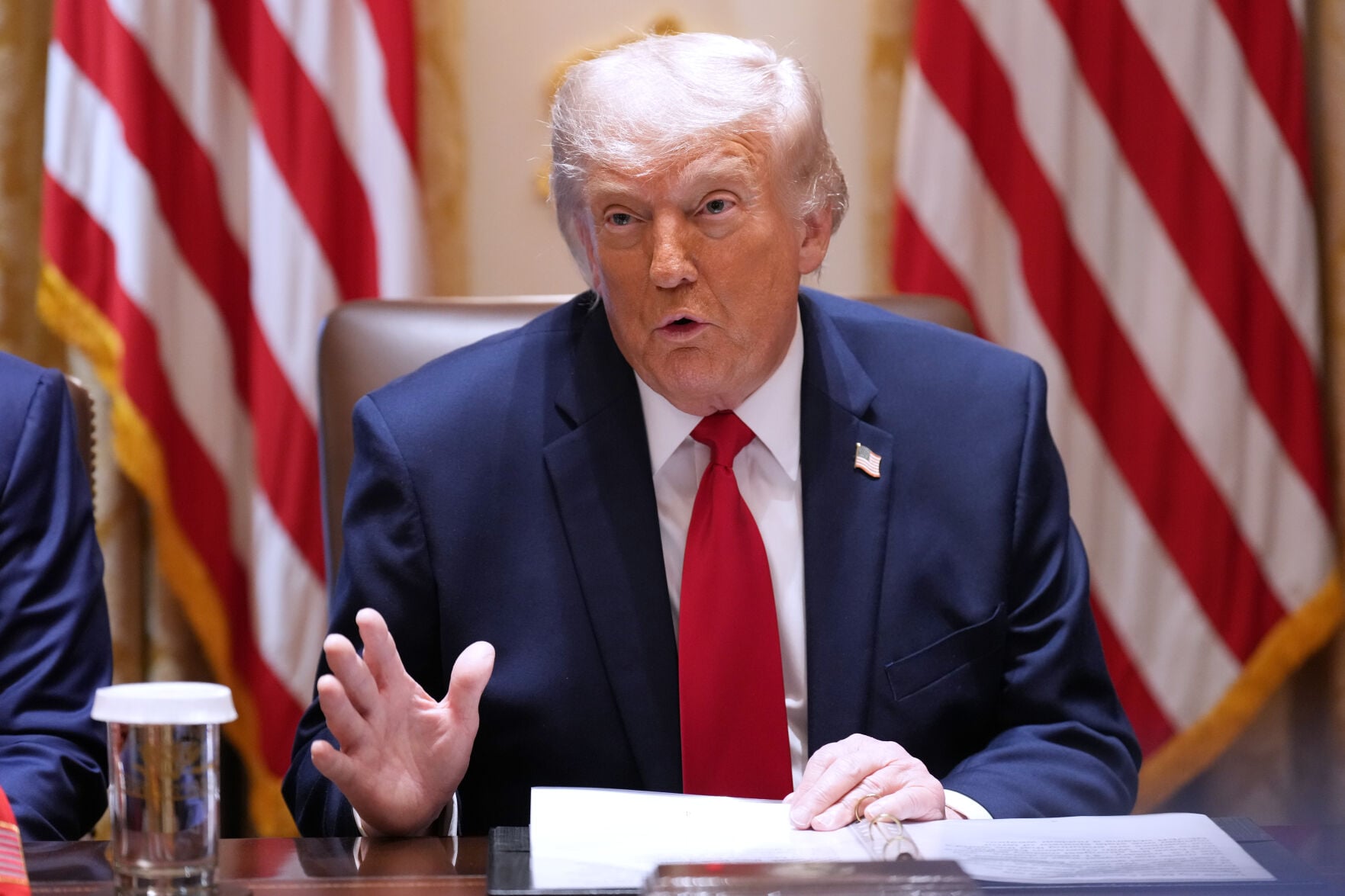
The relationship between President Donald Trump and Senate Republicans seems to be nearing a breaking point. Tensions flared this week on Capitol Hill as Trump upended Republicans efforts for a swift confirmation of his intelligence nominee and as he thwarted quick passage of a bill to renew a surveillance law. Republicans have been frustrated and openly critical of Trump's agreement with Iran. The public tensions are an almost complete reversal from a year ago. Back then, Republicans senators worked closely with Trump on a complicated effort to push through his massive package of spending and tax cuts.

President Donald Trump is trying to stop the confirmation process for his own nominee to head the nation’s intelligence agencies. Trump's extraordinary move Wednesday upended Senate efforts to renew a crucial surveillance program that expired last week and fueled fresh tensions with fellow Republicans on Capitol Hill. Trump declared in a social media post he was delaying the nomination of Jay Clayton as director of national intelligence just hours before his scheduled hearing. Republicans eventually postponed the hearing for Clayton, who's U.S. attorney for the Southern District of New York. Further complicating matters, Trump says he won't sign the surveillance program renewal without his legislation to require proof of citizenship for voters.
Senate panel postpones confirmation hearing for intel nominee Jay Clayton after Trump directs him to not appear.
Ohio Gov. Mike DeWine is using his bully pulpit to call for an end to the death penalty in his state. Announcing his decision Tuesday, the 79-year-old Republican cited his expertise as a former county prosecutor, member of both chambers of Congress and as Ohio's attorney general. But DeWine's support for a policy change is far from assured to make waves, even in a state controlled by his own party. DeWine is moderate in comparison to younger Republicans whose political aspirations rely on endorsements from President Donald Trump, a staunch death penalty supporter.

An initial agreement between the United States and Iran to extend their shaky ceasefire is inching toward a formal signing. That's despite questions Monday over the fate of Tehran’s nuclear program and an offensive by Israel in Lebanon that could prolong the fighting and scuttle the deal. The agreement signed electronically Sunday is meant to provide a meaningful truce in a monthslong war that has killed thousands across the Middle East, including the top leaders of Iran’s theocracy, and raised the prices of fuel, food and other basic goods far beyond the region. But logistical and military challenges underscored the fragile nature of the deal.

Prime Minister Keir Starmer said Britain will ban children under 16 from using social media apps like Snapchat, TikTok, and YouTube from early next year. The announcement on Monday aims to protect young people from harmful content and excessive screen time. Starmer acknowledges that some teens might bypass the ban but emphasizes the importance of children's safety and happiness. YouTube and Meta, the parent company of Facebook and Instagram, warned that a blanket social media restriction could push kids into unregulated online spaces. The ban aligns with global efforts to enhance online safety for children.
Lawmakers are demanding the National Science Foundation stop dismantling the Ocean Observatories Initiative, a $386 million ocean monitoring network being wound down under President Donald Trump's administration. House Democrats on two committees call the action illegal. Democratic Sen. Jeff Merkley says he's drafting legislation to freeze the removal of instruments until a full scientific review is completed. The National Science Foundation directed the removal of most of the system’s instruments from waters off Oregon, Washington, Alaska, North Carolina and Greenland by 2027. Monday’s pushback against the Republican administration’s actions comes as scientists are set to remove instruments from the Pacific and as an El Niño event is predicted to arrive this summer.
UK’s ban on Palestine Action under terror legislation was lawful, Court of Appeal says.

A first-of-its-kind law in New York could force 3D printers sold for homes and business to come equipped with technology blocking them from making guns.
A key surveillance tool that allows the United States to collect intelligence abroad appears certain to expire. That's because the House and Senate on Thursday failed to temporarily extend the program, which is set to expire on Friday at midnight. The votes are seen as a protest to President Donald Trump’s temporary pick of housing regulator Bill Pulte to head the nation’s intelligence agencies. After the votes, Trump announced he planned to nominate U.S. Attorney Jay Clayton, a former chairman of the Securities and Exchange Commission, for the permanent job. It's not clear whether that might break the impasse.